Construction robotics training is becoming a strategic driver for industrialized construction, automation and new productive models across the global building sector
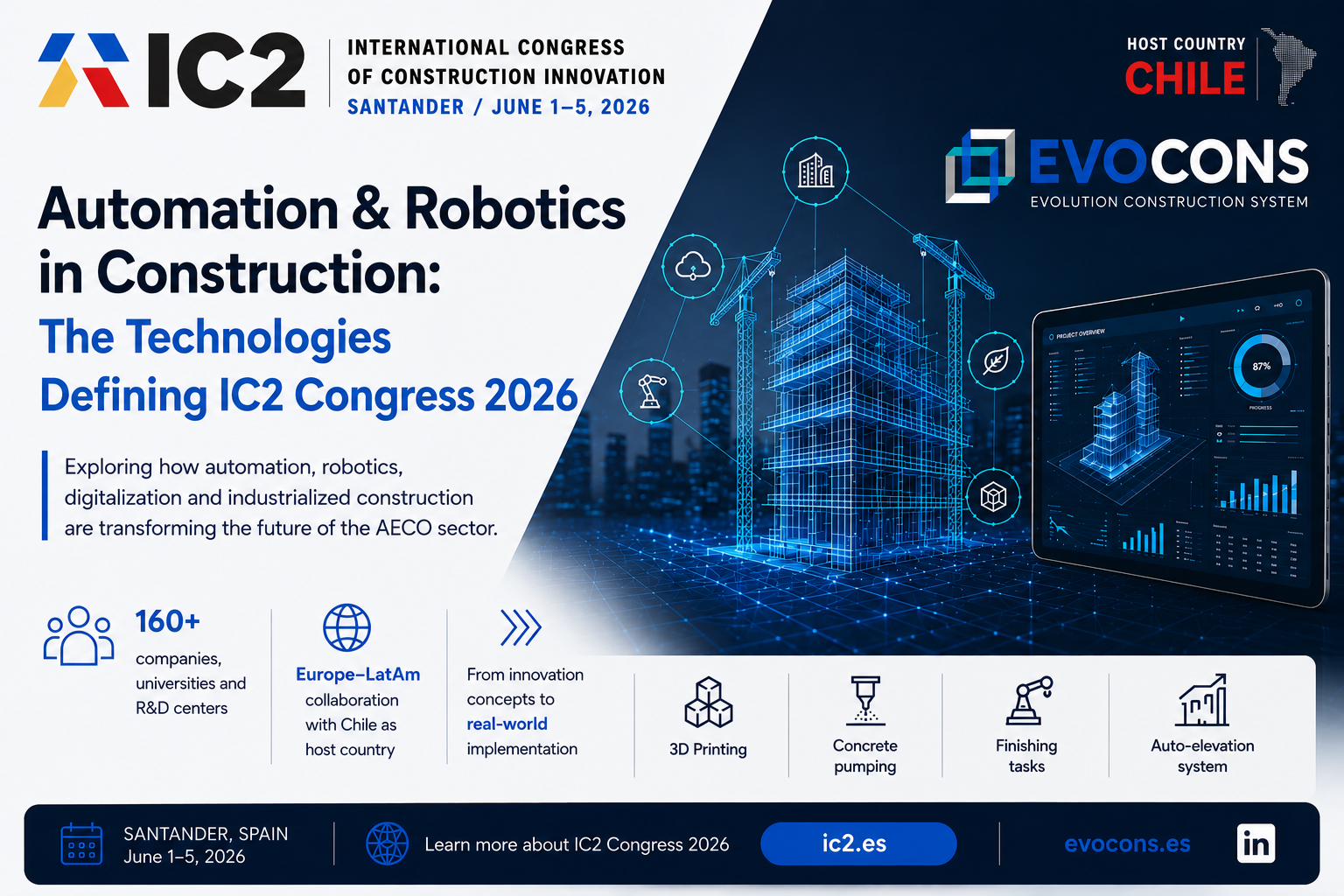
Robotics in construction is driving a new phase in the industry, defined by automation, digitalization, and the integration of advanced technologies such as artificial intelligence, sensor systems, and 3D printing in construction.
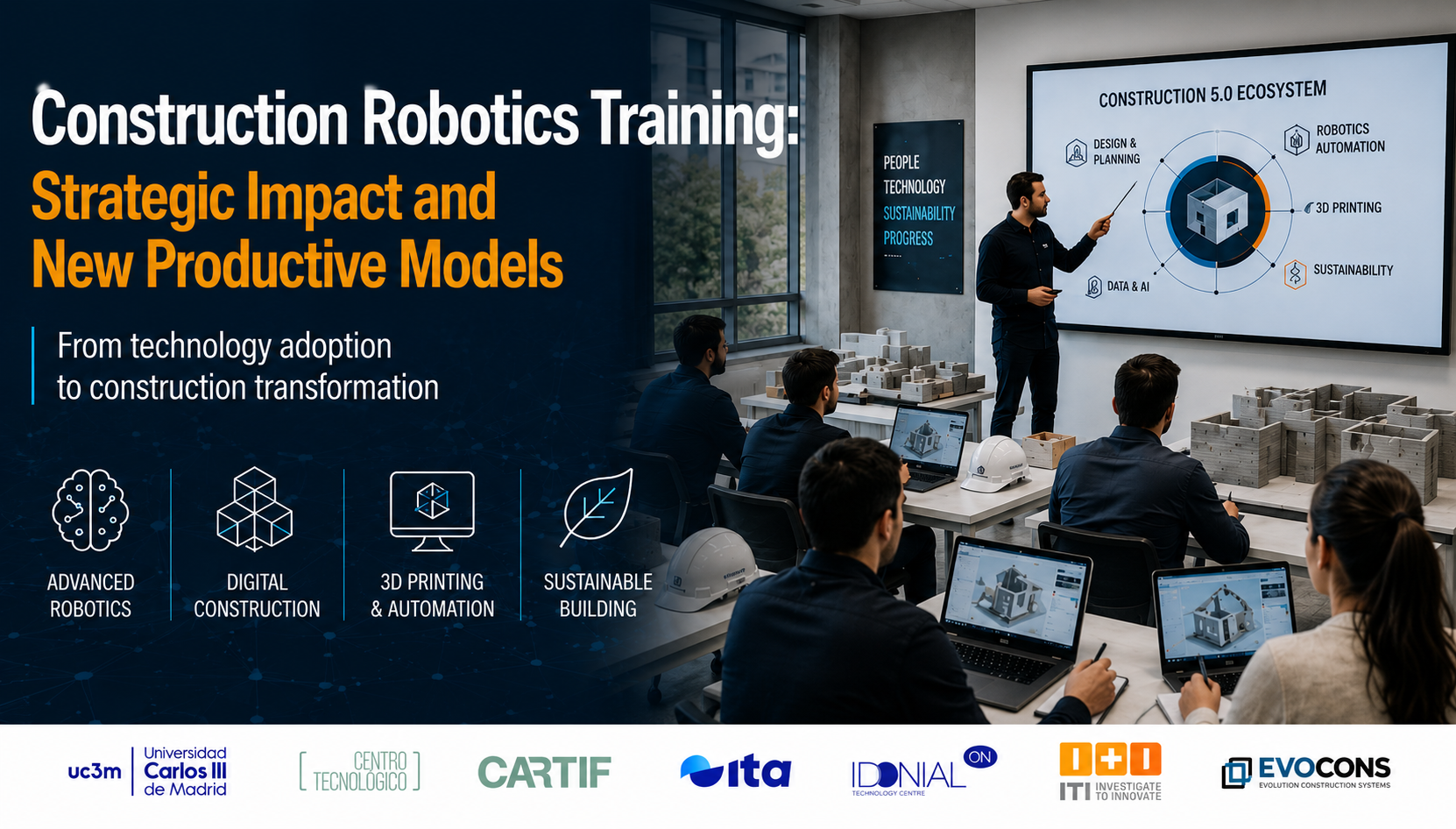
In this context, the Construction robotics training , promoted by the Spanish Construction Technology Platform (PTEC), stands out as a strategic initiative that brings together leading organizations shaping the future of the sector.
👉 Learn more about the programme:
https://plataformaptec.es/cursos/formacion-robotica-construccion/
Structured into three blocks, the programme provides a progressive vision, from technological foundations to the transformation of construction into a fully automated and connected industry.
Block 1: Foundations and trends, the technological backbone of construction robotics
📅 March 26, 2026
The first block, featuring leading organizations such as CARTIF, ITA, and CATEC, established a strong technical foundation for understanding robotics in construction.
Experts including:
- Dr. José María Llamas (CARTIF)
- Jesús Espelosín (ITA)
- Francisco Javier Garrido (CATEC)
Main topics covered:
- Robotic systems applied to construction
- Quadruped robots (legged and hybrid wheeled systems)
- Advanced sensing technologies: LiDAR, RGB-D cameras, thermal sensors, IMU and environmental sensors
- Collaborative robots for façade rehabilitation
- 3D printing on vertical surfaces
- Autonomous navigation in unstructured environments
- Aerial robotics for infrastructure inspection
- Integration with digital twins
Strategic value:
This block establishes the technological capabilities required for robotics to operate in complex construction environments, enabling safer, more connected and data-driven processes.
Block 2: Applied robotics, real-world use cases and opportunities
📅 April 9, 2026
The second block of the construction robotics training programme, with participation from GMV, TECNALIA, ITA, and UC3M, focused on real-world applications already being deployed in the industry.
Key contributors included:
- Ángel Lázaro (GMV) – autonomous robotics and AI
- Amaia Aramburu (TECNALIA) – additive manufacturing and industrialization
- Jesús Espelosín (ITA) – mobile robotics
- Santiago Martínez (UC3M) – underground robotics
Main topics covered:
- Autonomous mobile robotics integrated with vision-language models (VLMs)
- Structural 3D printing in construction and additive manufacturing
- Robots for inspection and verification of industrialized systems
- Automation of heavy machinery (loaders, trucks, dumpers)
- Underground robotics for urban microtunneling
- Intelligent monitoring and safety systems
Strategic value:
This block demonstrates that robotics in construction is already delivering measurable results, improving efficiency, safety, and operational performance.
Block 3: The future of construction, impact, challenges and opportunities
📅 April 16, 2026
The final session brought together key organizations such as IDONIAL, ITI, and Evocons, focusing on the strategic transformation of the construction sector.
Experts included:
- Juan Carlos Piquero (IDONIAL) – advanced manufacturing
- Andrés Meseguer (ITI) – 5G and industrial connectivity
- Ainhoa Amaro (Evocons) – digital construction and automation
Key topics addressed
- Flexible robotics for advanced construction processes
- Large-scale additive manufacturing (BAAM)
- 5G communications and LoRa networks for connected job sites
- Advanced sensor integration and real-time connectivity
- Environmental impact, cost efficiency and sustainability
- New production models enabled by automation
Strategic value:
This block shifts the focus from technology adoption to industry transformation, highlighting how robotics is redefining construction business models.
Evocons: automation and 3D printing in construction in action
Evocons, represented by Ainhoa Amaro, contributed a practical perspective based on real-world projects and validated technology.
The session highlighted how robotics, AI, and 3D printing in construction converge to enable automated building systems through solutions like evoConstructor®, a multifunctional construction robot.
Key capabilities include:
- Automated 3D printing in construction
- Structural execution and finishing processes
- Integration of multiple construction phases into a single system
- Optimization of materials and resources
According to corporate data:
- Up to 30% cost savings
- Up to 40% CO₂ reduction
- Processes up to 4x faster
A collaborative ecosystem driving industry transformation
One of the key strengths of the programme is the ecosystem it brings together: technology centers, research institutions, and companies leading innovation in construction.
This collaboration enables:
- Knowledge transfer
- Technology validation
- Faster adoption across the industry
- New opportunities for scalable innovation
Conclusion
The Robotics Training Programme for Construction represents a key initiative in accelerating the transition toward construction 5.0.
By combining technical foundations, real-world applications, and strategic vision, it provides a comprehensive understanding of how robotics and automation are reshaping the industry.
The participation of leading organizations such as CARTIF, TECNALIA, IDONIAL, and Evocons confirms that the future of construction is already underway.
Looking to integrate robotics and 3D printing in construction into your projects?
👉 Discover how EvoConstructor® can optimize your processes or request a demo.