
Housing Shortage: A Structural Challenge
The global housing gap is one of the most pressing structural challenges of our time. Affecting over 1.6 billion people, this growing housing scarcity requires more than increasing supply, it demands a transformation in how we design, plan and build.
From industrialized construction to 3D printing housing construction and automation in construction, new technologies are emerging as viable solutions to improve scalability and efficiency.
This article explores the global context, limitations of traditional models, and how integrated construction systems are enabling scalable, efficient and sustainable housing delivery.
A Global Housing crisis That Requires Structural Change
The global Housing crisis is not an isolated or temporary issue. It is a structural challenge affecting millions of people worldwide.
According to ONU-Hábitat, more than 1.6 billion people currently live in inadequate housing conditions.
Rapid urbanization, limited affordable housing supply, and structural limitations in traditional construction models are at the center of this global housing crisis.
As cities continue to grow, demand for housing is accelerating faster than the industry’s ability to deliver.
Solving the housing shortage therefore requires not only building more homes, but fundamentally rethinking how we build them.
A Housing Crisis That Crosses Borders
The housing deficit affects both emerging and developed economies.
Several structural factors contribute to this growing imbalance:
- Slow bureaucratic and regulatory processes
- Limited availability of urban land
- Rising costs of materials and logistics
- Low productivity in the construction sector
Together, these factors limit the capacity to deliver housing at the scale required, intensifying the global housing crisis.
Latin America: A Persistent Lack of housing supply
In Latin America, the housing gap remains particularly acute.
United Nations estimates suggest that up to 45% of households lack adequate housing, affecting more than 300 million people.
Rapid urbanization and informal development increase pressure on construction systems that are not designed to scale efficiently.
Europe and the United States: A Structural Housing deficit
The housing crisis is also a growing concern in developed economies.
Across Europe, access to affordable housing has become a central policy issue. Countries such as Germany, France and the Netherlands face structural housing deficits.
In the United States, the shortage exceeds 3.8 million homes, according to industry estimates.
This highlights that the housing supply shortage is not limited to emerging markets, it is a global structural issue.
Spain: A Growing Housing Gap
Spain is also facing a significant housing gap, estimated between 600,000 and 765,000 homes.
Between 2021 and 2024, more than 350,000 new households were formed without a proportional increase in housing supply.
Regions such as Madrid, Barcelona, Valencia and Tenerife are experiencing particularly high pressure.
Additionally, social housing represents only around 3% of total stock, well below the European average.
The Limits of Traditional Construction Models
Meeting housing demand using conventional methods presents several challenges:
- Long construction timelines
- High dependence on on-site labor
- Complex logistics and supply chains
- Low productivity growth
These limitations make it difficult to address the housing deficit at the required scale.
Industrialized Construction and Automation as housing imbalance Solutions
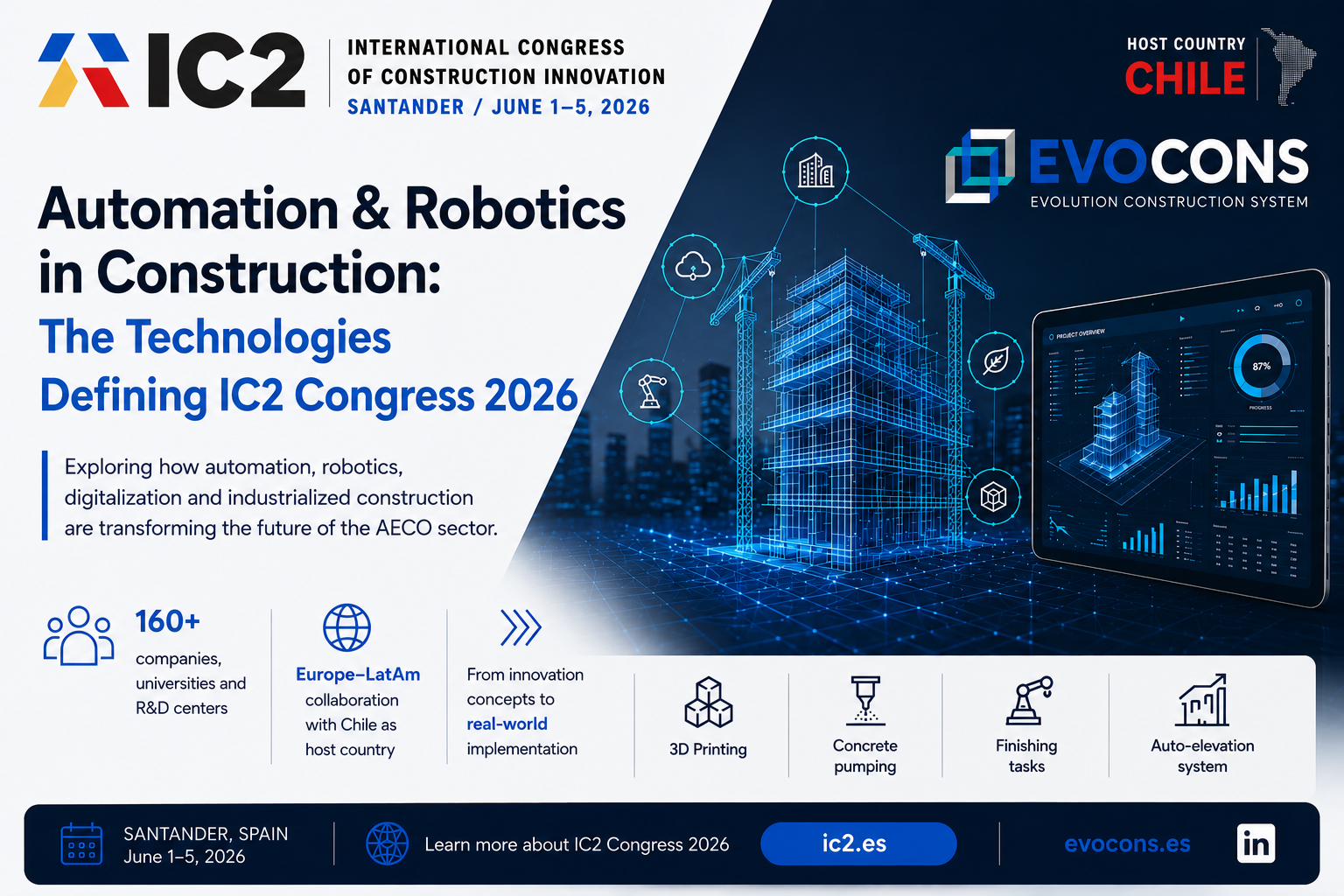
To address the housing gap, the industry is increasingly turning to industrialized construction, automation in construction, and 3D printing housing construction.
These approaches enable:
- Faster construction timelines
- Optimized material usage
- Reduced waste
- Greater scalability
Industrialized construction introduces standardized, repeatable processes, while automation in construction reduces variability and improves efficiency.
Meanwhile, 3D printing housing construction allows for flexible, on-site digital fabrication, reducing logistics and enabling new architectural possibilities.
Together, these technologies represent some of the most promising housing gap solutions available today.
Challenges in Scaling Construction Innovation
Despite progress, several barriers remain:
Limited automation across the full process
Many solutions still rely on manual steps, especially in finishing phases.
Lack of integration
Not all systems connect seamlessly with BIM, planning tools or regulatory frameworks.
Scalability challenges
Many successful projects remain at pilot stage and are not yet deployed at scale.
As a result, while innovation is advancing, the overall construction model has yet to fully transform.
EVOCONS: A Scalable and Integrated Construction Model
In this context, EVOCONS introduces an integrated approach combining:
- Industrialized construction
- Automation in construction
- 3D printing housing construction
Through the EvoConstructor® system, multiple construction phases can be automated directly on-site, including:
- Foundations
- Structural walls
- Structural elements
- Finishing processes
- Real-time monitoring and control
Unlike fragmented solutions, this system integrates multiple capabilities into a single operational platform.
This includes:
- Multifunctional robotics adapted to real construction environments
- In-situ digital fabrication without molds
- Real-time traceability aligned with ISO/ASTM 52939
- A self-elevating system for vertical construction
This approach has been validated in real projects in Spain, demonstrating its ability to reduce construction time, optimize costs and improve sustainability.
Technology as a Response to the Lack of housing supply
By integrating automation in construction, industrialized construction, and 3D printing housing construction, new systems can address key limitations of traditional methods.
These technologies enable:
- Faster delivery of housing
- Greater adaptability to local conditions
- Improved efficiency and sustainability
They represent a new generation of housing shortage solutions designed for scalability.
Conclusion: Solving the Housing gap Requires Building Differently
The global housing supply shortage cannot be solved by scaling existing models alone.
It requires a fundamental transformation in how we build.
The future of construction must be:
- Scalable
- Sustainable
- Digitally integrated
- Capable of responding to real demand
Technologies such as industrialized construction, automation in construction, and 3D printing housing construction are key to this transformation.
They are not just innovations, they are necessary housing shortage solutions.
Interested in exploring how advanced construction technologies can help address the housing gap?
Discover how EVOCONS solutions and EvoConstructor® technology are transforming construction processes and enabling more efficient housing development.
Learn more → Contact EVOCONS